

You can tell a surprising amount about a place by what happens when something goes slightly wrong.
A parcel arrives, but the label is unclear. A document exists somewhere, although finding it takes three searches and an abandoned password reset. A question gets sent into a customer-service inbox and disappears into the digital equivalent of a dark cupboard. None of these things necessarily stop an ordinary transaction.
The small friction, however, stays with you. It changes the feeling of what you are holding. Suddenly, the object itself is only one part of the experience. The other part is everything around it: where it came from, what has been documented, whether the information is accessible, whether the packaging makes sense, whether the people behind it appear to have thought beyond the moment of sale.
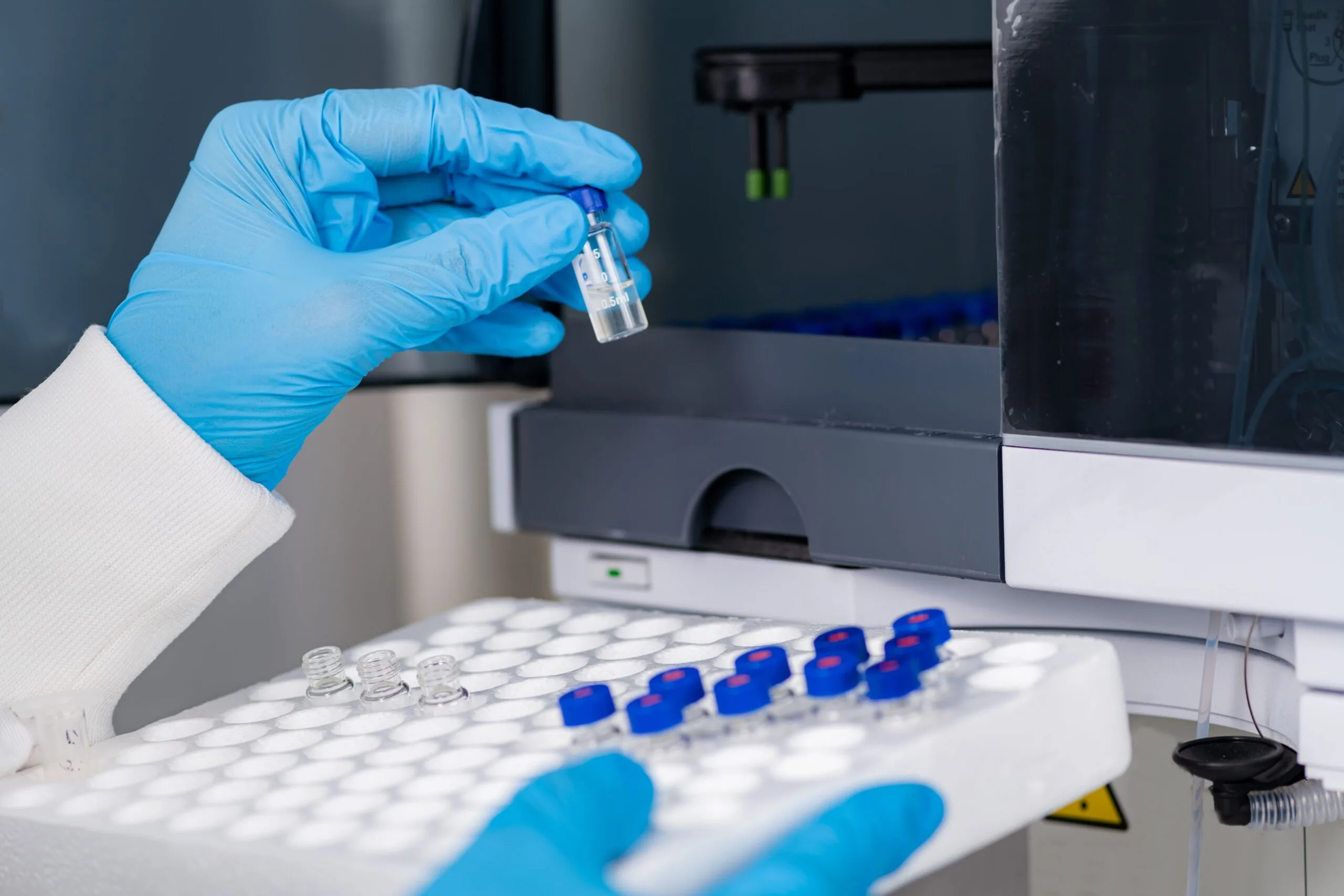
In research, those details are important. The more specialized the material, the less useful vague reassurance becomes. A researcher does not simply need something that looks convincing. The surrounding infrastructure has to support confidence: identification, documentation, testing, traceability, fulfilment and clear communication.

Why a Research Material Is Only Part of the Story
You can recognize the particular problem of online research purchasing almost immediately. There is an enormous amount of information available, but information and transparency are not the same thing.
A page can be crowded with technical language and still leave basic questions unanswered and supporting documentation difficult to locate.
RVA Peptides was founded by Jason Ntiamoah and Mason Fierro with the idea that purchasing research materials should feel more transparent, professional, discreet and dependable.
That intention is reflected in the company’s current presentation. RVA identifies its materials as third-party tested, provides access to Certificates of Analysis, and places research-use requirements prominently rather than hiding them in fine print. Its website also includes dedicated areas for COAs, order tracking, research categories and policies.
The Unremarkable Infrastructure Behind Serious Research
You notice the train when it is late or a payment system when it declines. Good infrastructure has a peculiar quality: it disappears.
That is the problem RVA Peptides says it set out to address: not simply the supply of research materials, but the uncertainty that can surround buying them.
According to the company, much of its operational framework has been developed internally, including systems connected with fulfilment, order tracking, affiliate management, internal dashboards, customer communication and other workflows. The company has also continued to redesign its website and refine areas such as checkout, payment options, product presentation, packaging and tracking.
A research supplier can be judged not only by what sits inside a vial but by how much uncertainty surrounds it.
It can come from something as simple as not knowing where to find a Certificate of Analysis, unclear product information or inconsistent communication. Even an ordering process that feels unfinished can introduce another layer of uncertainty.
What Familiar Research Materials Can Still Leave Unanswered
NAD+ provides a useful example of how that philosophy works in practice because the material itself is already familiar within research conversations.
A familiar research material can create its own kind of shortcut. Once a name is recognizable, there is a temptation to assume that the important questions have already been answered. But familiarity does not establish the identity or characteristics of a particular batch. That is where documentation becomes more consequential than name recognition.


At RVA, NAD+ 500MG is presented as a research compound studied for its role in cellular energy production, mitochondrial function and metabolic activity in controlled laboratory environments. The product is supplied as 500mg of lyophilized powder, with the site stating a purity of above 99% verified by HPLC and identifying the material as batch tested with a documented Certificate of Analysis.
The NAD+ page makes the COA accessible from the product listing. It identifies the research category and specifies the form and quantity. It also states that the material is intended exclusively for laboratory research and not for human or veterinary applications.
When the Name on the Vial Doesn’t Tell You Enough
KLOW is an 80mg research peptide blend that occupies a different place within the catalogue.
Unlike NAD+, which has considerable name recognition within cellular and metabolic research discussions, KLOW is a newer and more distinctive addition to RVA’s range. The company describes it as an advanced research peptide blend studied in relation to cellular signaling, metabolic pathway modulation and controlled laboratory research applications.
The product is offered as an 80mg lyophilized powder, with RVA listing an above 99% HPLC-verified purity and providing a batch-tested Certificate of Analysis. The site describes the material as intended strictly for laboratory and in-vitro research by qualified professionals.

A research supplier does not only need to accommodate materials people already recognize. It also needs a framework for presenting less familiar materials.
When the name on the vial does not tell you much by itself, the surrounding information has to do the work. What is it? How is it characterized? What testing accompanies it? What is the intended research context? Where is the supporting documentation?
What Happens When Improvement Is Part of the Process
There is something reassuring about a company that treats its operation as something that can keep being refined.
The polished version of a business story usually leaves little room for the awkward middle: the systems being rebuilt, the packaging being reconsidered, the website changing because something did not work as well as expected. Yet those are often the details that reveal whether a company is actually paying attention.
RVA Peptides describes its development in those terms. Rather than presenting its current operation as a finished achievement, the company says it continues to invest in testing, inventory, packaging, technology, research materials and the experience surrounding an order.
The more interesting measure is the one it gives itself: that the company should be noticeably better six months from now than it is today.
Reliability, then, does not have to mean pretending nothing ever needs fixing. It can mean noticing where friction appears and doing something about it.
It brings the discussion back to the parcel at the beginning. A confusing label, a missing document or an awkward ordering process may seem insignificant in isolation. But whether those problems are noticed, addressed and improved tells its own story.
In research materials, where documentation and traceability can matter as much as the material itself, that willingness to keep refining the less visible parts of the experience becomes part of the larger picture.

The Details That Become Visible When Trust Matters
There is a temptation, particularly in specialized scientific markets, to believe that sophistication has to look complicated. Often, it does not. Sometimes sophistication is simply a document that is easy to find. It is a product page that tells you exactly what a material is and what it is not. It is an order-tracking system that works, or packaging that has clearly been considered.
The company is explicit that its products are for laboratory and research purposes only, not for human or veterinary use, consumption, diagnosis, treatment or prevention of disease. Its NAD+ and KLOW materials are presented within that research-use framework.
That boundary matters because it keeps the focus on the research material, the evidence surrounding it and the systems required to handle it responsibly.
Remember that parcel that arrived at the door. The box itself is rarely the interesting part. What matters is everything that travels with it: the documentation, the identification, the provenance, and the sense that someone has thought about what happens after the order is placed.