
As she slipped the spoon back into the drawer it dawned on her that she had forgotten the honey.
She stood barefoot on the kitchen tiles, one hand still resting on the open drawer, listening to the refrigerator hum behind her. Everyone else was still fast asleep.
She closed the drawer.
Then opened it again.
It was such a small thing to stop for, but it made her think about how many other things people do for the people they love. It happens almost absent-mindedly, sometimes in the early morning hours like where she found herself now. Things that are done so often, they become part of how the household runs.
The honey, the lemon, and the cup warming between two hands.
Years later, she might not remember which morning it was, but she would remember the ritual.
That is perhaps what has become so interesting about the changing language of wellness. For all its talk of optimization, measurement and improvement, some of the most enduring forms of care are moving in the opposite direction.
The kitchen, in this sense, is having a quiet renaissance. It is a place where someone knows which jar is nearly empty, which herbs belong in the cupboard, and which preparation appears when the weather changes. Where ingredients can be recognized by sight and smell. Where care has been happening there for years.

When Wellness moves Closer to Home
Wellness now arrives with a language of its own. There are ingredient lists to study, powders to measure, routines to track, protocols to follow and apps ready to tell us whether we slept, moved or recovered well enough. Much of that information can be useful. But somewhere along the way, caring for ourselves can begin to feel like another system to manage.
Perhaps that is why there is something quietly reassuring about returning to what is familiar. A jar of herbs on a kitchen shelf, a bottle prepared in small batches, a recipe remembered because someone once made it for you. These things ask for attention, but not necessarily expertise. They bring wellness back into a space where it can be seen, touched, prepared and shared.
A Family Kitchen Becomes a Philosophy
Elizabeth Martino’s story begins with a mother wanting to learn how to better support her family using plants, food and traditional remedies. What began in a home kitchen eventually became Burnt Sky Apothecary, a woman-owned herbal wellness company built around a deceptively simple philosophy: healing starts at home. The emphasis is on reconsidering things that may have become unfashionable precisely because they are familiar. Herbs, honey, vinegar, spices, and the kitchen itself.
The two preparations that began the business remain central to it: Elderberry Syrup and Classic Fire Cider. Both draw on long-standing herbal traditions, but their appeal sits comfortably within a modern desire for greater awareness of ingredients and preparation.
The Intelligence of Knowing What Goes into the Jar
There is an intimacy to something made in small batches. It is partly visual. Ingredients remain recognizable. It is also psychological. Knowing what something contains changes the relationship a person has with it.
Burnt Sky’s Elderberry Syrup is made with organic elderberries, Ceylon cinnamon, clove, rose hips, ginger, lemon and local raw honey. The syrup is carefully cooled before the honey is added so that the raw honey is not exposed to high heat. It contains no preservatives, artificial ingredients or added “natural flavors.”
The syrup also illustrates that people increasingly want rituals that can fit inside existing life.
The company describes the syrup as an alcohol-free preparation and offers several ways of incorporating it into everyday routines, from adding it to tea or sparkling water to drizzling it over yogurt or pancakes.
Care becomes more sustainable when it is allowed to remain ordinary.

Fire Cider and the Return of Boldness
Classic Fire Cider belongs to an older herbal tradition built around infusing apple cider vinegar with roots, herbs and spices. Burnt Sky’s version combines raw apple cider vinegar with ginger, garlic, horseradish, onion, cayenne, black peppercorn, jalapeño, lemon, rosemary, nettle, turmeric and local raw honey. Each batch is infused for at least six weeks before being pressed, strained, finished with honey and bottled.
In an age of products carefully engineered to disappear into smoothies and supplements, Fire Cider makes no attempt to be invisible. Its flavor is part of the experience. The product page describes it as a daily tonic and suggests taking it by the tablespoon, adding it to warm water or tea, incorporating it into dressings, or drinking it straight.
Wellness here is not presented as an immaculate lifestyle. It can be earthy, sharp, pungent and imperfectly domestic. That feels closer to real life.

The Appeal of the Small Batch
There is also a cultural reason small-batch wellness resonates now.
Consumers have spent years being told to personalize everything from skincare to fitness. Small-batch making offers another kind of personalization. It restores the human hand to the process.
Burnt Sky has grown from a home-kitchen beginning into a licensed herbal food business, with relationships with local retailers and farms and Burnt Sky Studio, a commercial production kitchen and gathering space in the Pennsburg/Red Hill area of Pennsylvania.
That growth could easily have changed the character of the original idea. Instead, the company’s stated philosophy remains centered on bringing traditional herbal wellness back into the home.
A Different Definition of Everyday Care
Everyday well-being is not a replacement for professional healthcare, nor does it need to make grand claims about what a food or herbal preparation can accomplish. Its value can be found in the smaller territory of routine: paying attention, preparing thoughtfully, recognizing seasons and building habits that make a person feel connected to their own life.
Elderberry Syrup and Fire Cider belong to a broader way of thinking about food and plants as part of domestic life. One is sweet, familiar and easy to incorporate into food and drinks. The other is intense enough to make its presence known. Wellness can happen in the kitchen.
What Gets Passed Down
A recipe survives because someone remembers it, an ingredient is recognized because someone once explained what it was, and a preparation becomes familiar because it appeared in a particular season, at a particular time, in a particular home.
That makes the story behind Burnt Sky particularly fitting. Martino’s children are woven into the company’s name: “Burnt” comes from her daughter Sienna, referencing burnt sienna and the colors of a sunset, while “Sky” comes from her son Akashi, whose name means sky in Sanskrit.
The family remains present in the name because family was present at the beginning.
The Kitchen Was Never Just a Kitchen
The modern wellness industry will undoubtedly continue to produce sophisticated tools, technologies and formulas. There is, however, another form of sophistication in knowing when something does not need to be made more complicated.
A kitchen can be a place where food is prepared, but it can also be where knowledge is accumulated, and where a daily act, repeated long enough, begins to carry meaning.
Burnt Sky Apothecary’s Elderberry Syrup and Classic Fire Cider began as preparations made from a desire to care for a family and became the foundation of a larger business. Their significance is not about how far the company has travelled from that kitchen, but how deliberately the idea has stayed close to it.
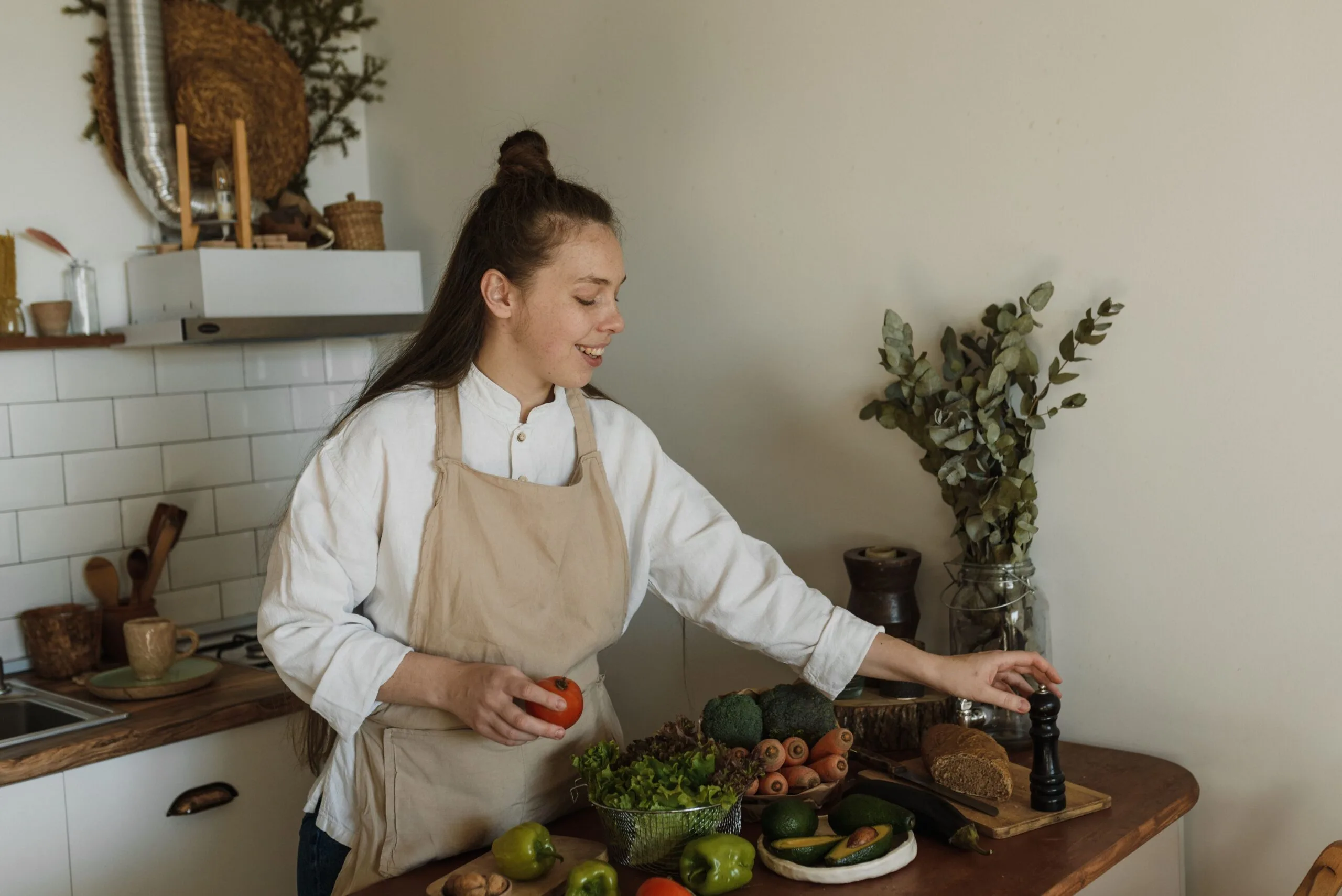
Perhaps that is why the image of that quiet kitchen matters. The drawer opening, the forgotten honey, a lemon drying on its plate, and a person standing barefoot on cold tiles before the rest of the house has properly begun.
It was an ordinary morning, and that is precisely the point. The rituals that shape a life become meaningful afterwards, when someone looks back and realizes that care was there all along.