
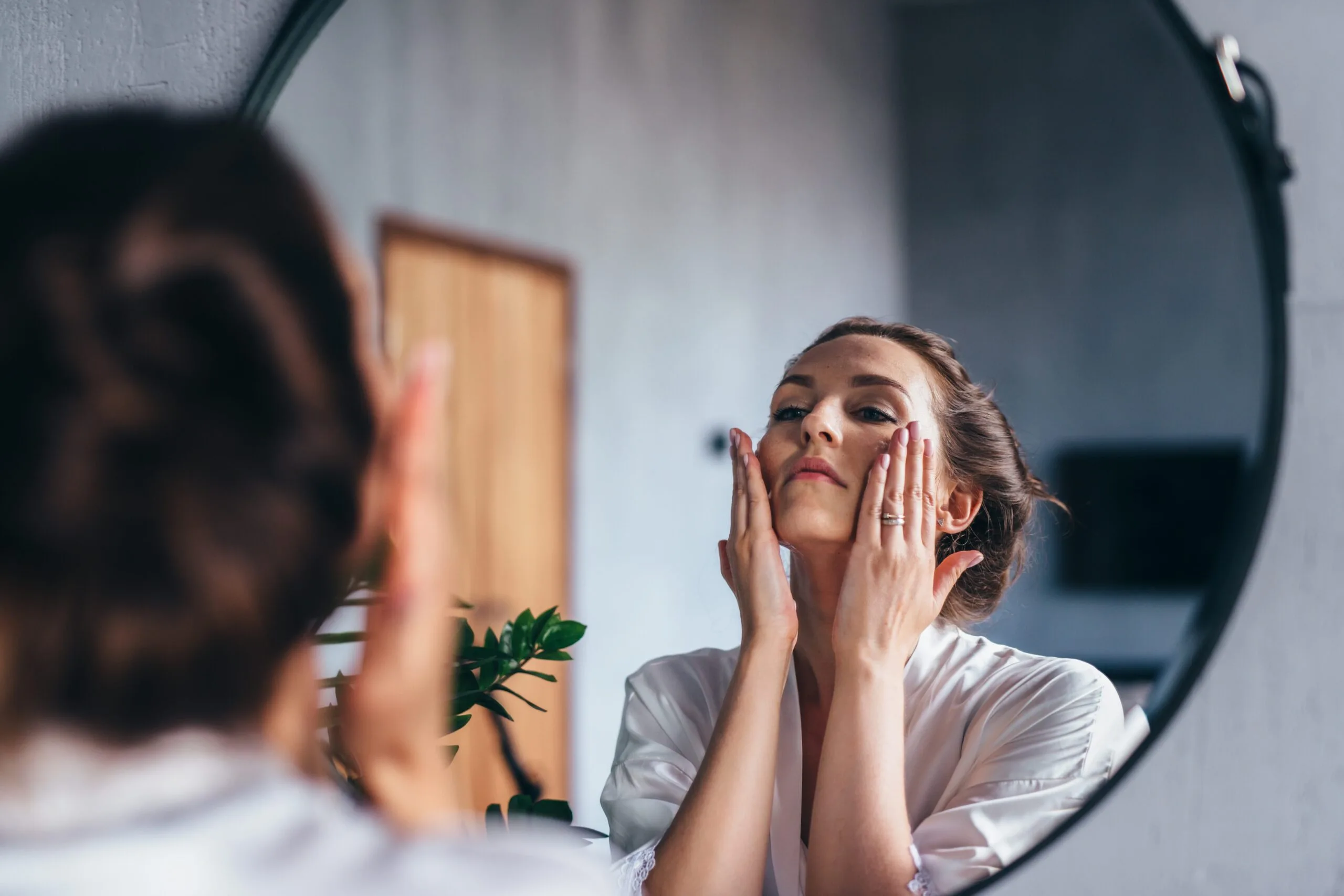
There are some skincare jars that disappear into the morning routine. The lid comes off. A little cream goes onto the fingertips. It gets worked into the skin, the jar goes back on the shelf, and the day continues.
Then there are the jars that make someone stop halfway through the motion because the ingredient list raises a question.
That is what happens with Restore Peptides’ GHK-Cu Whipped Tallow with Methylene Blue.
The ingredient list starts somewhere familiar, then quickly moves somewhere else. Grass-fed beef tallow and jojoba oil sit alongside copper peptides and methylene blue, reflecting Restore Peptides’ background in peptide processing and formulation.
Suddenly, a moisturizer becomes a doorway into a much larger world of research.
The company has its roots in the technical handling, processing and documentation of research materials themselves.
That distinction matters at a time when peptides have moved rapidly from specialist scientific circles into mainstream wellness conversations.

Before the Product, There Was the Process
Long before peptides became a fixture of wellness conversations, the founder was developing specialized expertise in the processing and lyophilization of research peptides.
Launched in 2024 as a U.S.-based manufacturer, the company sources and verifies its materials, with lyophilization performed in the United States. Lyophilization, also known as freeze-drying, removes water to help improve stability during storage.
The scientific language on the label therefore has a context beyond marketing. It connects to a business built around research materials and the processes used to manufacture and handle them.
That is also where testing becomes important.
The company states that its materials undergo third-party testing, including analytical techniques such as high-performance liquid chromatography and mass spectrometry, with batch-specific Certificates of Analysis available for its products. The company also states that its materials are manufactured and handled with traceability from raw ingredient through final packaging.
A Certificate of Analysis does not tell a consumer whether an ingredient will produce a particular biological or cosmetic outcome. What it can do is provide documentation about what was tested and what was found in a particular batch.
When reading a Certificate of Analysis, details such as the batch or lot number, material tested, analytical method, reported result and testing date can help establish what was examined and when. They still cannot establish how a finished product will perform.
That is one of the most important distinctions in research-driven wellness.
Restore Peptides positions its products for laboratory research, scientific experimentation and analytical purposes only. That boundary is particularly relevant when discussing compounds that have attracted attention outside their original research settings.
The closer science gets to everyday wellness, the easier it becomes to confuse scientific interest with established use.
When a Research Ingredient Meets the Bathroom Shelf
The GHK-Cu Whipped Tallow with Methylene Blue makes that tension unusually visible.
The base begins with ingredients that feel almost deliberately familiar. Tallow has experienced a notable resurgence in modern skincare, particularly among consumers interested in richer, simpler formulations. Jojoba oil, shea butter, squalane and glycerin likewise belong to the established language of moisturization and skin conditioning.
Then the formula changes register. GHK-Cu is a copper-binding peptide that has been studied in connection with skin biology and the extracellular matrix. Research into copper peptides is one reason GHK-Cu has become such a recognizable name in peptide skincare.
There is an important line between research interest in an ingredient and evidence for a particular finished product.
A laboratory study does not automatically predict what will happen when an ingredient is combined with other substances in a cream. Concentration, formulation, stability, delivery, study design and the specific outcome being measured all matter.
Alongside GHK-Cu, the formula incorporates Palmitoyl Tripeptide-5 and Acetyl Hexapeptide-8, creating a multi-peptide formulation rather than relying on a single peptide.
And then there is methylene blue.
The compound has a long history in scientific and medical research, making its appearance in a modern skincare formula particularly intriguing. Researchers have investigated its redox properties and its potential relationship with oxidative processes in a variety of laboratory contexts, including research related to skin.
Again, scientific curiosity is not the same thing as a proven cosmetic outcome.
The formula also contains ingredients with considerably longer histories in skincare, including niacinamide, Centella asiatica, manuka honey, allantoin and vitamin E derivatives.
Traditional richness sits beside contemporary cosmetic science. Established skincare ingredients sit beside compounds whose research histories extend well beyond the beauty industry.
It is less about replacing one school of skincare with another than about showing how different strands of ingredient research are increasingly finding their way into the same formulation.


Why the Research Story Matters
There is a tendency in modern wellness to compress complicated science into a sentence. A molecule becomes a breakthrough and a promising early finding becomes a finished conclusion. The original research may have contained caveats, limitations and unanswered questions, but those details rarely survive the journey from scientific paper to social media caption.
Restore Peptides occupies an interesting position within that environment because its own stated identity is rooted in research materials rather than in making every compound sound immediately useful.
The question worth asking is: What do researchers actually know about it, and how far does that evidence go?
It also makes the distinction between ingredients particularly important. Some have decades of cosmetic use behind them. Others have extensive laboratory research but more limited evidence in particular applications. Still others are being investigated primarily for their pharmacological or biological properties.
Putting them on the same label does not make their evidence bases identical. That is where the company’s broader catalog becomes revealing.
Beyond the Bathroom Shelf
Tesofensine could hardly seem further removed from a jar of tallow-based skincare. Its story begins in neurological research. The interesting story is how radically different research compounds can share the same documentation and testing conversation even when their applications are completely different.
Tesofensine is classified as a triple monoamine reuptake inhibitor, affecting the reuptake of norepinephrine, dopamine and serotonin.
It also illustrates something important about scientific research: discoveries and research directions do not always follow the path originally expected. A compound can be investigated for one reason and generate an entirely different research question along the way.
Originally investigated as a small molecule research compound for neurological conditions including Parkinson’s and Alzheimer’s disease, researchers observed something unexpected along the way: participants were losing weight. Tesofensine research findings ultimately opened an entirely new direction of research. The effect was later investigated specifically in the 2008 Lancet study.
Today, that research history continues to make tesofensine a compound of scientific interest. Restore Peptides supplies tesofensine research tablets strictly for laboratory research and analytical use by qualified researchers, backed by third-party testing and Certificates of Analysis for every batch.
Tesofensine demonstrates how far apart the worlds of research and consumer wellness can actually be, and why that distance matters.

The Value of Knowing Where the Line Is
The more complicated the science becomes, the more valuable it is to leave room for uncertainty. Research is messy. Findings have to be reproduced. Mechanisms have to be investigated. Results can raise new questions rather than settle old ones.
That uncertainty is not a weakness in science. It is how science works.
For consumers, researchers and formulators alike, the challenge is learning to recognize the difference between an interesting molecule, a promising research finding and a demonstrated real-world application. That distinction becomes especially important with peptides and other compounds that have moved quickly into popular wellness culture.
A Certificate of Analysis cannot establish that a product will deliver a particular health or cosmetic benefit. What it can provide is a layer of transparency around the material itself, something that becomes increasingly valuable as the market grows.
That is why the infrastructure behind a research product deserves attention. Where was the material produced? How was it handled? Was the batch tested? What analytical methods were used? Is there documentation for the specific batch?
Those questions may not be as immediately exciting as the latest ingredient trend, but they are the questions that bring the conversation back to evidence.

Where Restore Peptides Fits
The company sits at an unusual intersection. On one side is a rapidly expanding consumer fascination with peptides, longevity science and advanced skincare. On the other is the slower, more methodical world of research materials, analytical testing and laboratory documentation.
Its GHK-Cu Whipped Tallow with Methylene Blue sits directly in that intersection. The formula combines the sensory familiarity of tallow, jojoba and shea butter with peptides and methylene blue that carry very different scientific histories.
Tesofensine sits further away still, in pharmacological research.
Yet there is a common thread connecting them: the importance of understanding not just what appears on the label, but the research context surrounding it and the standards used to produce and document the material.
That may ultimately be the most compelling part of the story. Not that every ingredient is revolutionary or that every research finding translates neatly into a consumer benefit, but that there is a growing appetite for products connected to serious scientific work, and, with that appetite, a growing need for companies to show what happens behind the label.
A jar on a bathroom shelf can look very ordinary. The questions it raises do not have to be. Perhaps that is where the conversation around peptides becomes more interesting: not when science is made to sound certain, but when there is enough curiosity to look at the evidence, the formulation, the testing and the unanswered questions together.
The label may fit on a small jar or tablet bottle. The research behind it is considerably bigger.