
The first cup is often finished without anyone remembering drinking it.
It disappears between the shower and the front door, between the newspaper folded open on the counter and the last bite of toast. The mug gets rinsed. The day starts. Tomorrow, the same thing happens again.
There’s nothing wrong with that, but the morning cup doesn’t have to taste the same every day.
Then there’s ube.
So, what is ube? At its simplest, it is a tropical purple yam, also known as Dioscorea alata, with a naturally earthy, nutty flavor and deep roots in Filipino food culture.
Ube has quietly made its way onto bakery shelves and café menus. While the color is certainly eye-catching, the ingredient itself has a story that goes well beyond its vivid purple appearance.

Before the Latte, There Was a Root
Ube Superfood is a brand that was created as a way to make authentic Filipino ube easier to incorporate into everyday life without offering a heavily sweetened or artificially colored food. Ube Superfood sources its ube from family-owned farms within the Philippines. The roots are harvested, washed, steamed, dehydrated, and then carefully and finely milled before they get packaged as a shelf-stable powder. The resulting product is USDA Organic, vegan, and gluten-free. An additional bonus is that it contains no added sugar, artificial ingredients, preservatives, or fillers.
The process truly does matter because ube should not be focused on simply looking purple.
Watch ube disappear into a bowl of batter and the color becomes part of the recipe almost immediately. Authentic ube offers its own flavor that is often described as slightly sweet, nutty, and earthy.
Instead of reaching for an artificial color, sweetener, or flavoring, ube offers natural color and adds its own character to the recipe.
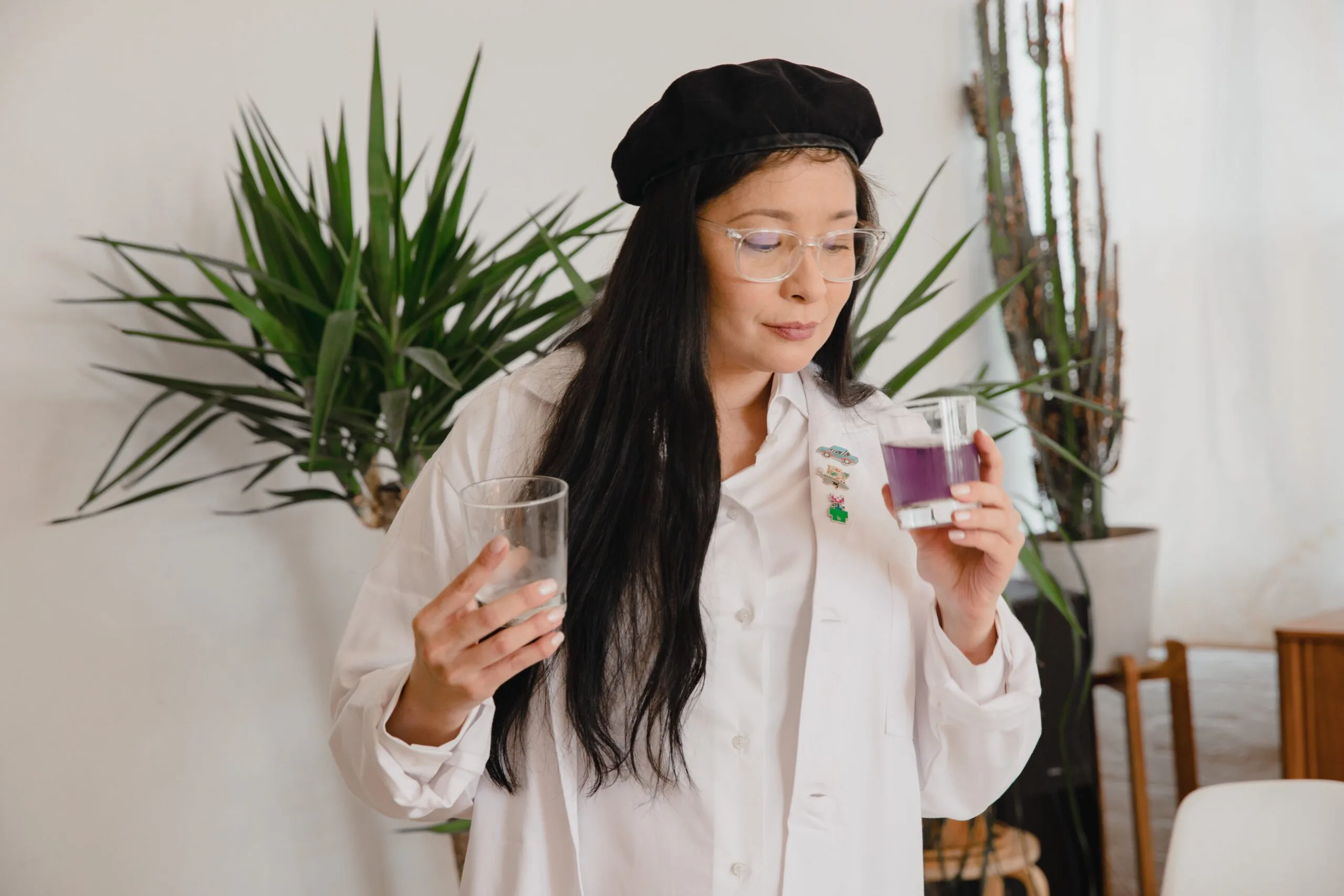
Think of the moment that you open a pinch of purple powder, add it to a little bit of milk, and stir it in. Suddenly, there’s a drink that looks like it came from a specialty café. And it required absolutely no complex routine or recipe. Just the novelty that comes from the ingredient itself.
Inside the Ube-Vanilla Blend
The actual product is intentionally straightforward, but it is important to get one very specific detail right: it is not a single ingredient, ube powder.
This formula intentionally combines ube with vanilla in order to create and offer a more rounded flavor profile.
Organic Ube Powder – Premium Authentic Ube for Lattes & Baking is made with 90% organic ube powder and 10% organic vanilla powder. Vanilla rounds out the naturally nutty, gently sweet character of the ube. The finely milled format ensures that the blend remains convenient enough for drinks and other recipes and is ideal in lattes, smoothies, and baked goods.
This ingredient list explains why the powder feels different from other brightly colored latte mixes, because modern mixes often contain several additional ingredients. The goal isn’t to create a complicated drink routine; it’s more about offering the ube itself room to become the main character, with vanilla helping round out the flavor.


It’s Purple for a Reason
The purple shade comes from naturally occurring pigments within the plant known as anthocyanins. These compounds belong to a larger family of plant pigments that are found in many different colored fruits and vegetables. Research has specifically examined the anthocyanins found in Dioscorea alata; the species associated with purple yam.
A 2020 study that was published in the International Journal of Food Science looked at the purple yam and found several anthocyanin compounds such as alatanin C. The study also identified phenolic compounds, flavonoids, starch, and amylose in the yam tubers studied.
An additional study published in Bioscience, Biotechnology, and Biochemistry looked at anthocyanins isolated from purple yams originating in the Philippines. The research found a number of acylated anthocyanins and observed their antioxidant activity in laboratory assays.
This research doesn’t mean that drinking an ube latte will offer any particular health outcome. It simply adds an interesting layer to an ingredient that might be chosen just because it makes a drink look good. Research continues to investigate these plant compounds, and yam is also a source of carbohydrates, fiber, and various micronutrients.
The key takeaway from this research is that the color is not just there for decoration.

Not Anti-Coffee, Just Pro-Options
The ube appeal is not about saying goodbye to coffee forever. Sometimes, people enjoy having another option. It is naturally caffeine-free, which means that ube powder brings something unique to the modern morning routine. There is also a lot of versatility here. One day, it might become a latte; another, it can go into a smoothie, and then next use it in pancake batter. The options are vast.
That makes it feel less like a supplement and more like something that belongs in the pantry.
This brand believes that wellness shouldn’t always demand complicated routines. Sometimes, wellness can be as simple as finding foods that make your everyday routines just a little more enjoyable.
The powder can be whisked into warm or iced milk, added to smoothie blends, or used to create baked goods. Imagine your pancakes on Sunday morning. They have a soft violet tint. A smoothie after your morning run that contains a nutty note. A muffin that looks like it’s packed with personality. This simple powder can create an afternoon drink that you can enjoy when coffee feels like too much caffeine.
It’s an ingredient with a personality all its own. With its distinct flavor, wildly vivid appearance, and Filipino roots, ube is much more than just another fleeting social media trend.
History in Every Sip
Ube has a long history in Filipino cuisine and agriculture. Its appearance in a modern kitchen may feel new, but the ingredient itself is anything but. What has changed is simply the form: a familiar root, turned into a powder that can sit quietly in the pantry until someone feels like making something different.
Perhaps that’s enough of a reason to try it.
Not every morning needs a new ritual. Sometimes, it’s just a matter of changing one small thing. The same mug. The same kitchen. The same few minutes before the day gets moving.
Only this time, the cup is purple, and maybe, for once, it’s a cup that doesn’t disappear without being noticed.