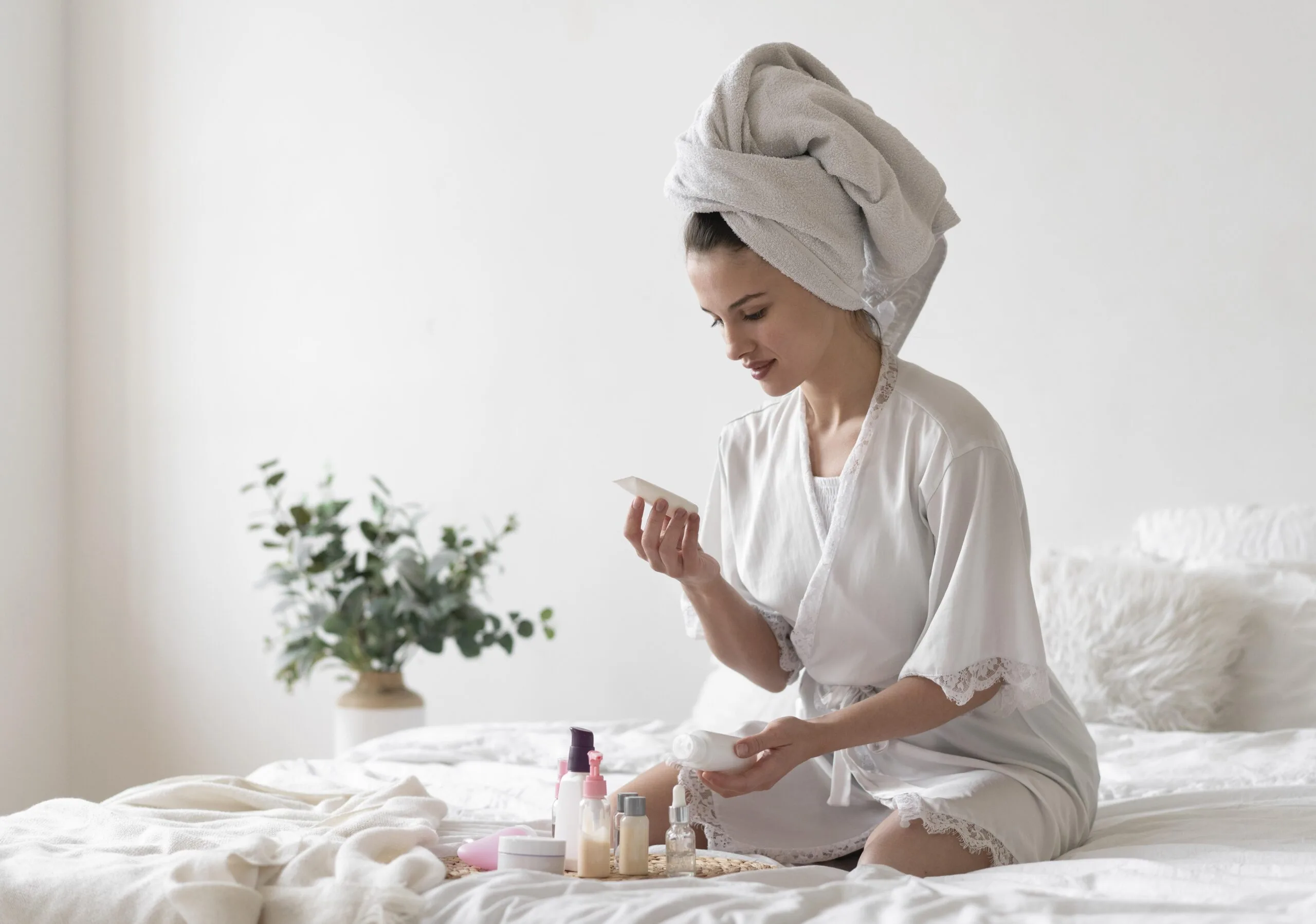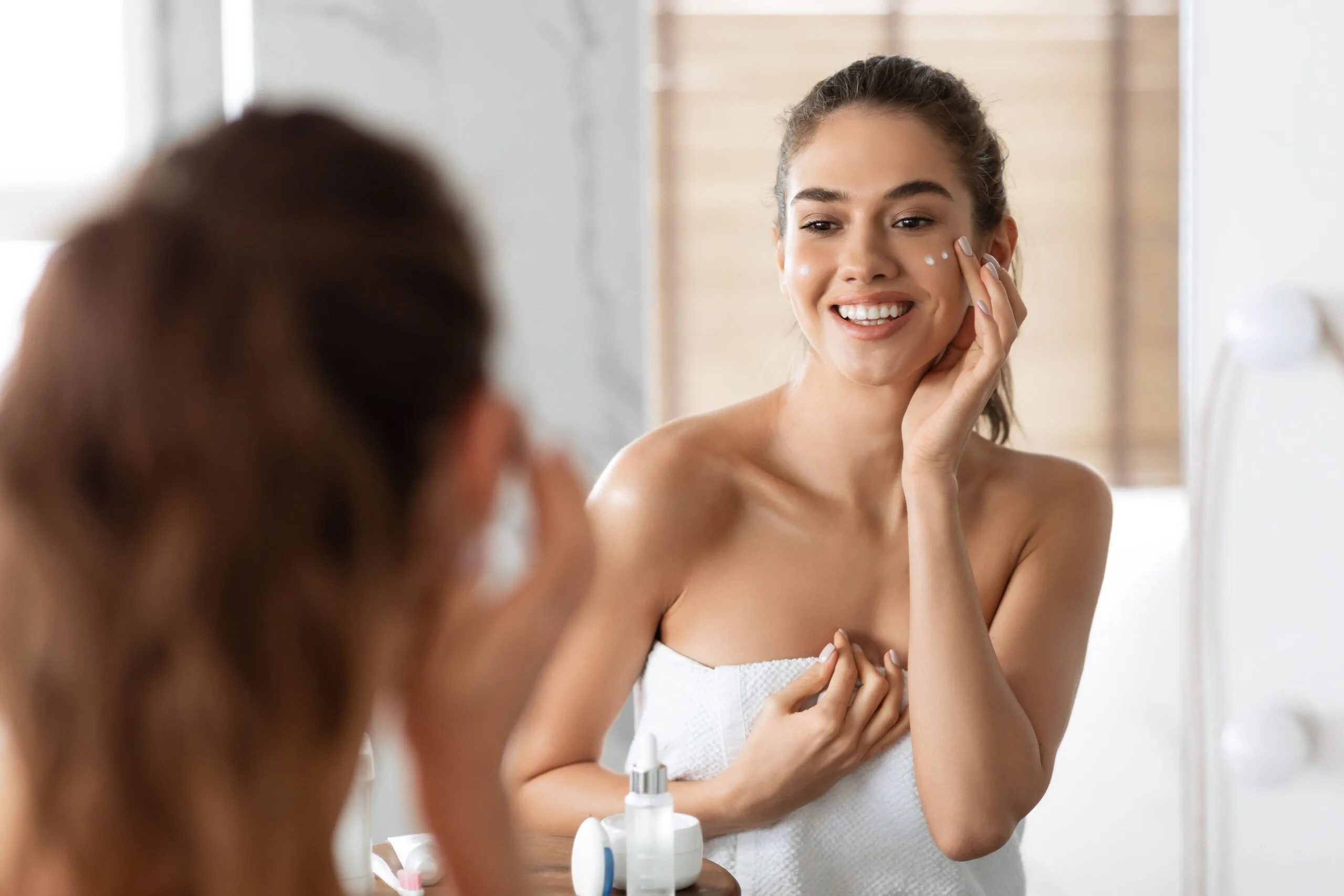

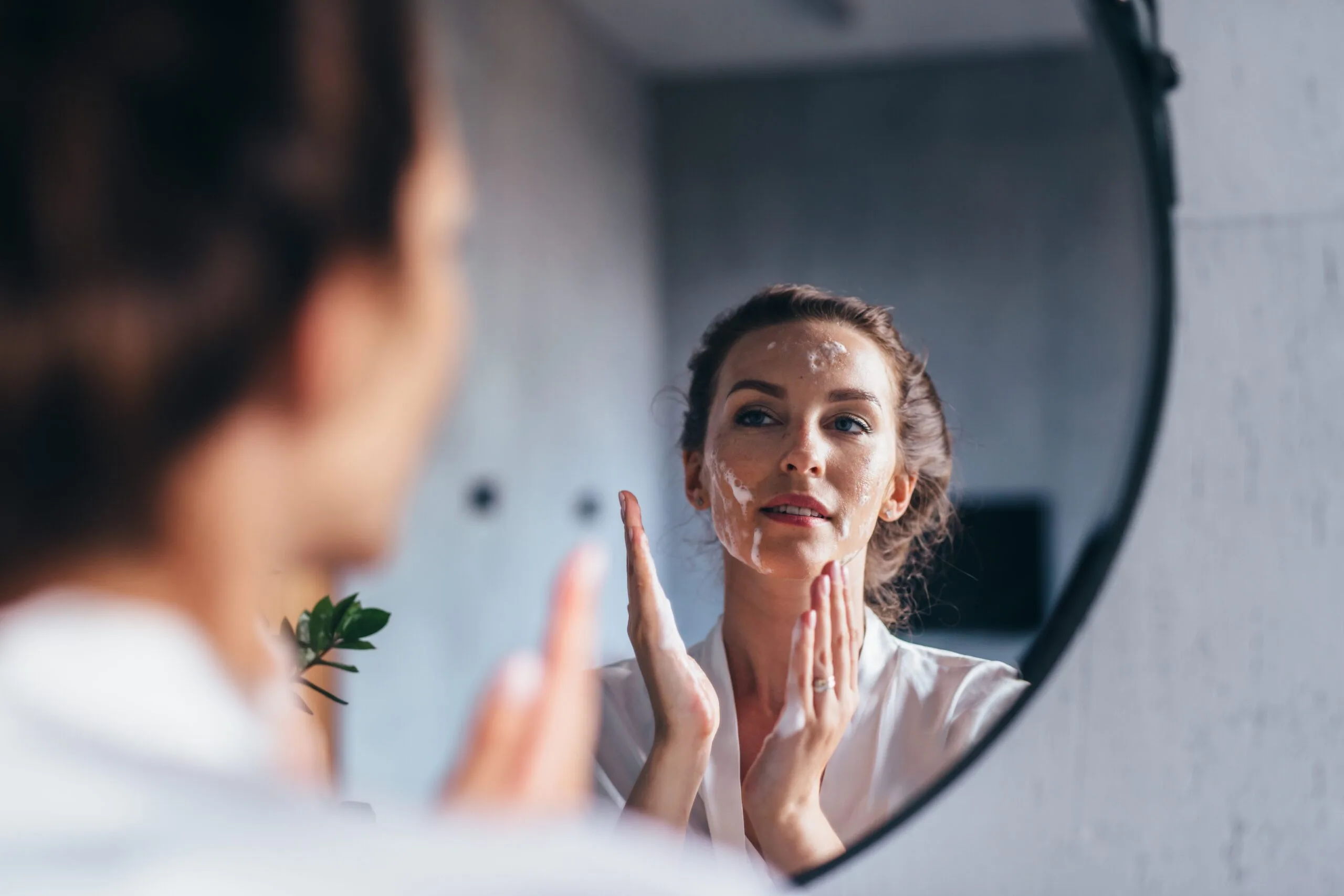
Late one evening, she was standing in the bathroom, the day’s noise finally beginning to settle. She had reached for it half-awake, as she had hundreds of times before. She turned it over, reading the small print while the shower steamed the mirror. There were ingredients she recognized and several she didn’t.
She started to question what she was actually putting on her skin.
For anyone trying to make more thoughtful choices about natural skincare, that moment is familiar. The difficulty isn’t necessarily finding another product. It is understanding what is already sitting on the bathroom shelf, knowing what the ingredients are doing there, and deciding whether the formula makes sense for you.
Skincare is used so routinely that it can become almost invisible: a cleanser at the sink, a cream before bed, an oil smoothed over the cheeks while thinking about tomorrow. Yet skin is not an afterthought. It is the body’s outermost boundary, constantly meeting the world around it.
For Dallas Fears, that uncertainty became personal. After more than 13 years in the skincare industry, she had spent years working closely with clients, studying ingredients, and learning what helped skin feel and look its best. Her own experience with breast cancer changed the way she thought about personal care. If people are thoughtful about what goes into their bodies, she began to wonder, why shouldn’t they be equally thoughtful about what goes onto them?
Instead of asking how many ingredients a formula contains, ask a simpler question: Why is each ingredient there?

Straight From the Source
Tallow is an ingredient with a long history in skincare, but its appeal today comes down to something remarkably simple: its naturally rich lipid composition and the character of its fatty acids.
Among those are oleic, palmitic, and stearic acids, fatty acids that are also part of the skin’s own lipid environment. Together, they give tallow its distinctive richness and emollient feel, allowing it to soften and condition the skin while helping reduce moisture loss from the surface.
It is not simply about using an ingredient with a long tradition. It is about understanding what that ingredient brings to a formula.
Tallow creates a rich, conditioning base that leaves skin feeling supple and moisturized. Its occlusive qualities can also help slow the loss of water from the skin, supporting the kind of lasting comfort many people want from a moisturizer.
In an industry that often equates better skincare with another serum, another active, or another treatment, there is something refreshing about taking a different approach. Healthy-feeling skin does not always need another layer added to it. Sometimes, it needs support for what is already there.
That principle shapes the formulas behind The Pure Original. Tallow serves as the lipid-rich foundation, while carefully selected carrier oils, botanical infusions, and essential oils are chosen according to the purpose of each formulation. The products are concentrated and water-free, with every ingredient included for a reason.
Straight from the Source Body Butter brings that philosophy to its formulation, focusing on moisture, conditioning, and support for the skin’s natural barrier while helping minimize moisture loss.
The Skin Barrier Doesn’t Need a Complicated Story
The skin barrier is part of the skin’s protective function, helping retain moisture while providing a first line of defense against the outside environment.
The idea can become surprisingly complicated once it enters the beauty aisle.
There are products marketed specifically for barrier repair, barrier strengthening, barrier recovery and barrier support. There are creams to layer beneath other creams, serums to use before those creams and treatments designed to address the consequences of using too many of the products in the first place.
The Pure Original takes a different route.
If the goal is to support the skin barrier, the starting point can be straightforward: cleanse appropriately, moisturize, condition the skin and help reduce unnecessary moisture loss.
That doesn’t mean every skin concern can be solved with one balm. It means recognizing that sometimes healthy-looking skin needs to be left alone long enough to do its job.

How to Choose Natural Skincare Products
Choosing natural skincare products does not have to mean treating the word “natural” as a guarantee of quality. Natural ingredients can still be potent, and different skin types can respond differently to the same formula.
A more useful approach is to look at the whole formulation. Which ingredients are included? Why are they there? How has the product been made? Does the formula suit your skin and your routine? And can the brand clearly explain what is inside?
At The Pure Original, the process begins with tallow and then builds outward. It is a formulation philosophy that values purpose over excess.
For someone standing in front of a bathroom shelf wondering what to trust, that clarity can be refreshing.
Not Just a Shelf Full of Products
The Renewal Collection takes the same thinking and turns it into a four-part ritual: a cleansing oil, elixir, eye serum and balm.
The collection is designed to work as a sequence.
The cleansing oil begins the ritual. The elixir follows with a lighter layer of nourishment. The Eye Serum brings attention to the delicate eye area, while the balm completes the routine with a richer layer of care.
There is something appealing about that progression because it gives each product a role rather than asking one formula to do everything.
It also changes the pace of skincare.
Applied slowly, an oil becomes a moment of contact. A balm can signal that the day is finished. Massaging a product into the face can make skincare feel less like maintenance and more like care.

A Label You Can Read with Your Fingertips
There is another part of The Pure Original’s story that makes its idea of care especially tangible.
Every product includes Braille labeling. It is a small physical detail carrying a much larger message.
For someone who is blind or visually impaired, identifying an everyday skincare product can require assistance. Different products may be easy for a sighted person to distinguish by their packaging, but that isn’t always enough for someone who cannot see the label.
Dallas and her husband, Chris, are also founders of fearlessHOPE, a nonprofit serving children who are blind or visually impaired. Their daughter has significant vision loss, giving their family firsthand experience with the practical barriers that can exist in ordinary daily routines.
That personal connection gives the Braille on each product a different significance. It isn’t simply an accessibility feature added at the end. It reflects the same philosophy that runs through the formulas themselves: pay attention to the details that can easily be overlooked.
Coming Back to What Matters
Back in that bathroom, the bottle was still part of an ordinary evening, but the way she looked at it had changed.
What was in the formula? Why was it there? And had the person using it been considered, too?
Those questions reach beyond skincare. They speak to how products are made, who they are made for, and whether care has been thought through from the beginning.
Sometimes trust doesn’t come from a bigger promise on the label. It comes from knowing what is inside, understanding why it is there, and knowing that the details have not been overlooked.
Sometimes, the way forward really is a return to the source