

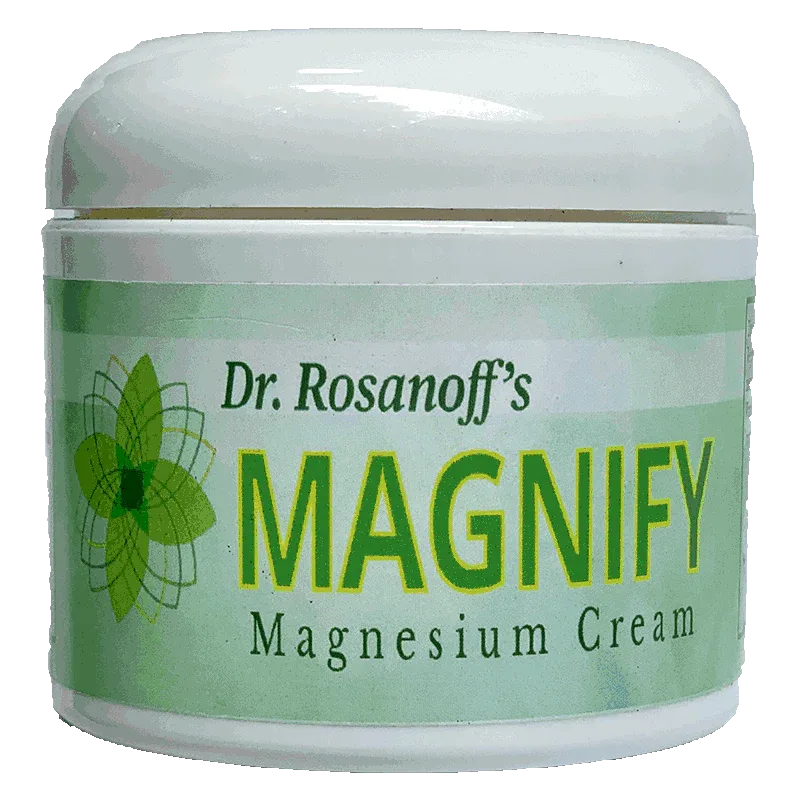
In the quiet of the world shortly before sunrise, a quiet movement is taking shape, one that begins with a fundamental truth rather than rousing slogans or eye-catching billboards: magnesium is becoming critically scarce in modern life. This seemingly mundane mineral has managed to evade our industrialized food system despite its crucial role in orchestrating more than 300 enzyme symphonies in the human body. Magnify Magnesium Cream from the Center for Magnesium Education and Research is the latest product to emerge as a frontrunner, thanks to an innovative combination of scientific rigor and sensory pleasure.
Suppose you were to go down an aisle lined with neatly placed products, each one offering some luxury, ease, or contentment. Refined wheat, sugar, and oil are the top three components, yet they are shockingly low in magnesium, which is conveniently missing from those shiny wrappers. Refining sugar into pure sucrose removes the minerals that were originally present in the cane and beet, which are vital sources of magnesium. Similarly, the mineral wealth present in the discarded husks is extracted from the oil of nutrient-dense seeds. And white flour? The magnesium-rich bran and germ are extracted from whole wheat, resulting in a powder that has up to 80% less magnesium than unprocessed wheat. This overly processed food diet relies on these three elements, which together contribute to a worldwide magnesium deficiency that manifests subtly but significantly.

When Discretion Turns into Pain
The symptoms are subtle at first: a quick twitch in a muscle as you sleep, persistent stiffness following a morning stretch, or an unexpected cramp. The unstoppable passage of time, stress, or excessive activity is what millions of people blame for these symptoms. But in all of these hushed murmurs, magnesium is expressing its sorrow—a body telling you it’s exhausted. Various chronic illnesses, including hypertension, insulin resistance, irregular heart rhythms, restless leg syndrome, and more, have been influenced by this depletion over many generations. However, most medical professionals didn’t know what this missing mineral was until quite recently.
An Unveiling by a Scientist
While studying for her Ph.D. in Nutritional Sciences at the University of California, Berkeley in 1985, Andrea Rosanoff discovered a perplexing fact: Despite magnesium’s critical function being lauded in peer-reviewed studies, it had been extensively neglected throughout her education. She set out on a mission to shed light on the significance of magnesium after being shocked by its exclusion in academia. She worked for many years penning over 30 journal articles and co-authoring The Magnesium Factor with Dr. Mildred Seelig, simplifying complicated scientific concepts for everyday people. To bring magnesium back into the limelight as a vital mineral for human health, she established the non-profit Center for Magnesium Education & Research in 2005.
A Revolution in Transdermal Delivery
Along the way, Dr. Rosanoff began to wonder about the drawbacks of oral supplements, such as the fact that absorption rates vary, many people experience gastrointestinal side effects, and it can be difficult to absorb enough magnesium through tablets or powders. What if the digestive tract had no involvement at all in this scenario? The solution is transdermal magnesium administration, which has been proven in clinical trials to increase serum magnesium levels only by applying the substance to the skin. Dr. Rosanoff worked with formulation experts to create Magnify Magnesium Cream. This rapidly absorbing topical solution combines power with purity.
[restrict]Indulge Your Senses for a While
Touching Magnify Magnesium Cream for the first time is like partaking in a sumptuous ceremony. As it glides over the skin, a delicate emollient with a faint aroma of mint and eucalyptus that awakens the senses without being overbearing. As the lotion melts away, magnesium ions seep into the skin’s surface, targeting aches and pains. Healing doesn’t have to be clinical or sterile but can be a pleasant sensory journey. What may be a chore—applying a remedy—becomes a time of attentive self-care via this experience.
Resonant Relief
Magnify Magnesium Cream’s quick results have been confirmed by users worldwide. After a long day of sitting at a desk, the office worker who uses it on her shoulders says the knots start to release almost immediately. Muscle cramps, according to runners who apply lotion to their calves after a stride, melt away like sugar in hot tea. Applying it before bed helps alleviate period cramps much like over-the-counter pain relievers, but without sleepiness or gastrointestinal problems. Magnesium used transdermally is more than just topical; it has a profound effect, according to all of the testimonies.
Recovery and Resilience: More Than Just Pain Relief
However, the tale of this life-changing magnesium helper goes beyond just relieving pain. Physical therapists are including the cream in their patients’ rehabilitation plans to help aching muscles, swollen joints, and surgical scars. Reduced inflammation allows patients to regain full range of motion far more quickly. When inflammation subsides, patients notice that their range of motion returns faster than ever. The cream is used by athletes of all levels in their cool-down regimens and is often used with stretching to promote faster muscle recovery. Evidence from each case shows that magnesium is an essential signaling molecule for cellular relaxation and repair.

Rediscovering the Earth’s Richness
You get a decent understanding of magnesium’s significance by examining soil. Photosynthesis, the process that sustains nearly all forms of life on Earth, relies on magnesium, a key component of chlorophyll. It secures ATP, the cellular energy currency. Soils have lost most of their mineral value due to contemporary agriculture’s reliance on monocultures, synthetic fertilizers, and unrelenting automation. Magnesium is sorely lacking in many modern foods, including grains and vegetables. Recognizing this need, the Center for Magnesium Education & Research provides a means of re-establishing what industrial processes have inadvertently depleted.
A Call to Optimal Health on All Levels
The creators of Magnify Magnesium Cream emphasize that true health is a complicated web, even if the product swiftly and directly replenishes magnesium. The foundation for long-term health is a magnesium-rich diet that includes nuts, seeds, dark leafy greens, and whole grains. When making dietary adjustments takes time to incorporate, the cream might be a helpful ally rather than a replacement. At MagnesiumCream.com, customers may find a wealth of resources to support their journey, including downloadable suggestions from the CMER’s Food Sources of Magnesium and recipes for nutrient-dense smoothies.
A Group Connected Through Mineral Knowledge
When you use Magnify Magnesium Cream, you’re joining a community of individuals who are firm believers in magnesium’s healing powers. Stories from people who have found relief from persistent migraines, restored sleep, or normalized blood pressure through dietary and topical therapies are featured on the site. An often-updated FAQ explains how to apply the product, how much to take, and any other questions you may have about absorption. Discussions can cover a wide range of topics due to magnesium’s positive effects on cognitive function, cardiovascular health, and skeletal and muscular wellness.
Real-Life Science
Some people remain hesitant, despite numerous peer-reviewed studies that support transdermal magnesium. They are weary of statements that appear too wonderful to be true. By offering access to published data, clinical trial summaries, and comprehensive ingredient source information, the Center for Magnesium Education & Research tackles this issue directly. Strict quality control is applied to every batch of cream to guarantee a constant magnesium content and a skin-safe composition. Empirical evidence and user-reported outcomes form the basis of the final product.
Tales of Metamorphosis
Consider Maya, a marathon runner who still experienced calf cramps even after stretching her muscles. Using Magnify Magnesium Cream, which a friend recommended to Maya, allowed her to go longer without needing to stop. Consider James, a software developer who suffered from chronic pain in his forearms and wrists due to constant typing. Even the most agonizing mornings became mild awakenings after massaging the area with the cream every night. These examples, along with many more like them, highlight how the cream brings together science and human experience, offering relief that touches people in a very individual way.
Slow Self-Care: A Master Class
In a world where instant messaging, on-demand video, and one-click shopping are the norm, Magnify Magnesium Cream promotes a methodical approach to self-care. In the process of applying the cream, one recognizes the value of one’s own body and makes a conscious effort to do so. It connects the empirical with the experiential, turning a passing event into a ritual. The reawakening harmonies of magnesium’s therapeutic murmurs flourish in such a setting.
Reviving Minerals
Magnesium has a story about its rediscovery. For a long time, this mineral’s understated strength was ignored in favor of more flashy nutrients and fads in wellness. Magnesium is once again at the center of holistic well-being as its essential functions are being revealed one study at a time. These functions range from nerve transmission to DNA synthesis. This renaissance is personified by Magnify Magnesium Cream, which provides a direct connection to the mineral that our contemporary society has almost forgotten.
Enjoy the Ride
Remember that a light touch could be all it takes to provide balance the next time you get a knot in your shoulder, cramps in your calves, or trouble sleeping. You are invited to listen—to both the language of your own body and to peer-reviewed science—by using Magnify Magnesium Cream, which is more than just a topical cure. From the food you eat to the lotion you apply to parched skin; magnesium is an essential mineral that begs to be a part of your daily routine.
Magnify Magnesium Cream offers a promise in a world full of noise: that there is a possibility for relaxation, rejuvenation, and resilience behind every ache and moment of unrest. Restoring balance requires only one thing: an openness to let the gentle force of magnesium lead the way. Embark on this journey towards a life revitalized at the cellular level and beyond, fueled by the mineral that matters most.
[/restrict]