
A diet heavy in sugar, fat, and processed foods has dramatically exacerbated the prevalence of obesity and chronic disease in America. Americans consume less fruit and vegetables than is advised each day, and the typical American also consumes over 200 pounds of red meat and poultry annually. This volume exceeds what is required to consume daily calories and protein for a balanced diet. The Centers for Disease Control (CDC) has released data showing that slightly over 42% of Americans are obese. Type 2 diabetes mellitus, cardiovascular disease, and hypertension are all at all-time highs in prevalence. It is well-recognized that nutrition and lifestyle significantly influence many prevalent chronic illnesses. As a result, many individuals are attempting to change their diets to lose weight and enhance their general health. As seen by the popularity of fad diets like the South Beach diet and the cabbage soup diet, many Americans will go to great lengths to lose weight. Many doctors suggest strategies like the Mediterranean diet to assist patients in managing chronic comorbidities and achieving their health objectives. A whole food, plant-based diet is another evidence-based alternative that can help with weight reduction and many so-called lifestyle illnesses, albeit doctors may advise less frequently. To successfully counsel patients on adopting alternative diets, doctors must be aware of the advantages and potential hazards associated with these diets.
Plant-Based Practices Through The Times
Many diverse ethnic groups have followed plant-based diets throughout human history. The Greek philosopher Pythagoras espoused the virtues of a vegetarian diet and believed that killing animals was unethical. This principle was built on his conviction that the immortal soul underwent reincarnation following the body’s death. He and his followers had straightforward veggies, bread, and honey diet. Thus, a plant-based diet was generally recognized as the Pythagorean Diet until the 1800s. Buddhism and Jainism are two faiths with a long history of promoting vegetarianism. These faiths approach the plant-based diet through the prism of nonviolence, just like Pythagoras’ adherents did.
In contrast, the newly founded Seventh-Day Adventist Church promoted a vegetarian diet for its members in the middle of the 1800s, even though its goal was to advance personal health and lifespan rather than follow an ethical code. Eating a plant-based diet is still a trend today. Between 2014 and 2018, the proportion of Americans who consume vegan food rose by 600%. Several things influence interest in plant-based diets. Many choose a plant-based diet to improve their health, show compassion for animals, or lessen their environmental impact. Some have also been partly influenced by popular documentaries, media attention, and celebrity endorsements in part.

Plant-Based Protein Vs. Meat Protein
Sadly, research after research demonstrates that meat isn’t the healthiest source of protein. It is much preferable to obtain the required protein from plants. In general, diets rich in plant materials are often healthier. Eating five servings of plants per day provides a slightly lower risk of heart attack and stroke, and increasing that intake to 10 servings per day could lower a person’s risk of cardiovascular disease by 28 percent and overall risk of death by 31 percent, according to a 2017 review in the International Journal of Epidemiology, which reviewed 95 studies. Numerous nutrients are found in the flesh of animals. You can get all the amino acids you need to make your biological proteins, as well as vitamins like B12, niacin, thiamine, B5, B6, B7, and vitamins A and K if you consume a range of animal meats (light and dark, not just beef), as well as different organs.
But here’s the thing: You will be fine if you replace all that animal protein with an equally varied diet of plant-based proteins like nuts, seeds, and beans. That’s because of the similar range of nutrients that these meals likewise contain. The most significant distinction is that most plants cannot generate vitamin B12 on their own.
Although fortified cereals and edible seaweed are both sources of B12, consuming animal products or taking supplements is the simplest method to obtain it.
[restrict]Plant-based proteins are far healthier than animal alternatives because they contain more nutrients per pound of calories than meat proteins. They also include fiber, which animal proteins lack (except for processed foods like tofu). Pay attention to the fiber. Fiber benefits include digestive help, support for healthy gut microbiota, and a decreased risk of cardiovascular disease.
The fat frequently accompanying steak is just another factor making it unhealthy for you. Because it provides flavor and texture, fat is one of the reasons steaks and hamburgers are so good. It might also cause your heart to get clogged. You also benefit from reduced saturated fat and zero cholesterol from plant proteins. At room temperature, saturated fats are solid and tend to raise your total cholesterol levels, which increases your risk of cardiovascular disease (although not as much as trans fats). As a result, the balance may eventually shift in favor of LDL (low-density lipid), which clogs arteries. Unlike red and dark meats, foods like almonds, avocados, and fish have far less saturated fats. As a result, they are known as “healthy fats”!

Plant-Based Is A Safe Bet
The fact that plant-based proteins are frequently safer than proteins from other sources is another significant advantage. Several whey protein formulations have come under fire for having high concentrations of poisonous metals like lead, mercury, or arsenic. Additionally, genetically engineered organisms rich in heavy metals are given to dairy cows, from which whey protein is derived. Manufacturers prefer GMOs since they are more affordable, even if they know they are not a good option for cows. Using GMOs compromises not just the welfare of animals but also your welfare. For instance, consuming arsenic has been related to malignancies and blood vessel damage. Additionally, cadmium can harm your DNA, and mercury ingestion can harm brain cells. Many believe that switching to plant-based proteins will impede your ability to grow muscle. It’s the contrary, though. It’s critical to realize that your body can only process a certain amount of protein at once. This means that even if you consume 25 grams of whey protein, your body might only be able to absorb 20 grams of it. On the other hand, your body is more likely to absorb all 25 grams of pea protein, which will result in better outcomes.
Not all proteins are created equal regarding appetite suppression and weight management. While getting enough protein might satisfy you and help you lose weight, too much protein is often stored as fat. So, increasing your protein consumption while consuming more calories overall might eventually result in weight gain. Fortunately, plant-based proteins can aid in preventing weight gain. This is because proteins derived from plants are better for healthy brain function. As a result, when you eat plant-based proteins, your brain can more effectively tell your body when you’re full. This will enable you to decline the additional dish at supper and, ultimately, stop your weight from fluctuating.
Why You Need to Know About Rockin’ Wellness
They have been inventive creators and wellness champions since 2011, and their goal is to maximize healthy living for everyone. People of all ages may enjoy the pure plant-based nutritional supplements their family-run company has created. They hold that everybody can reach optimal health and that the best organic superfoods on the planet are essential in this process. Nothing on the market at the time (2011) offered the crucial prebiotic and probiotic ingredients required for a healthy immune system and digestion. The ultimate success came with the development of Rockin’ Wellness, an excellent-tasting, simple-to-make, incredibly nourishing, energizing smoothie and shake mix that is affordable to everyone. The objective was to produce a complete body nutritional shake using the world’s finest superfoods. The recipe uses top-quality superfood components that are all-natural, vegan-certified, non-GMO, dairy-free, gluten-free, and have more than 2000 mg of Omega 3-6-9. The flavors include Chocolate Cacao, Vanilla Mocha Swirl, and more.
Rockin’ Wellness Vegan Chocolate Cacao Nutritional Mix
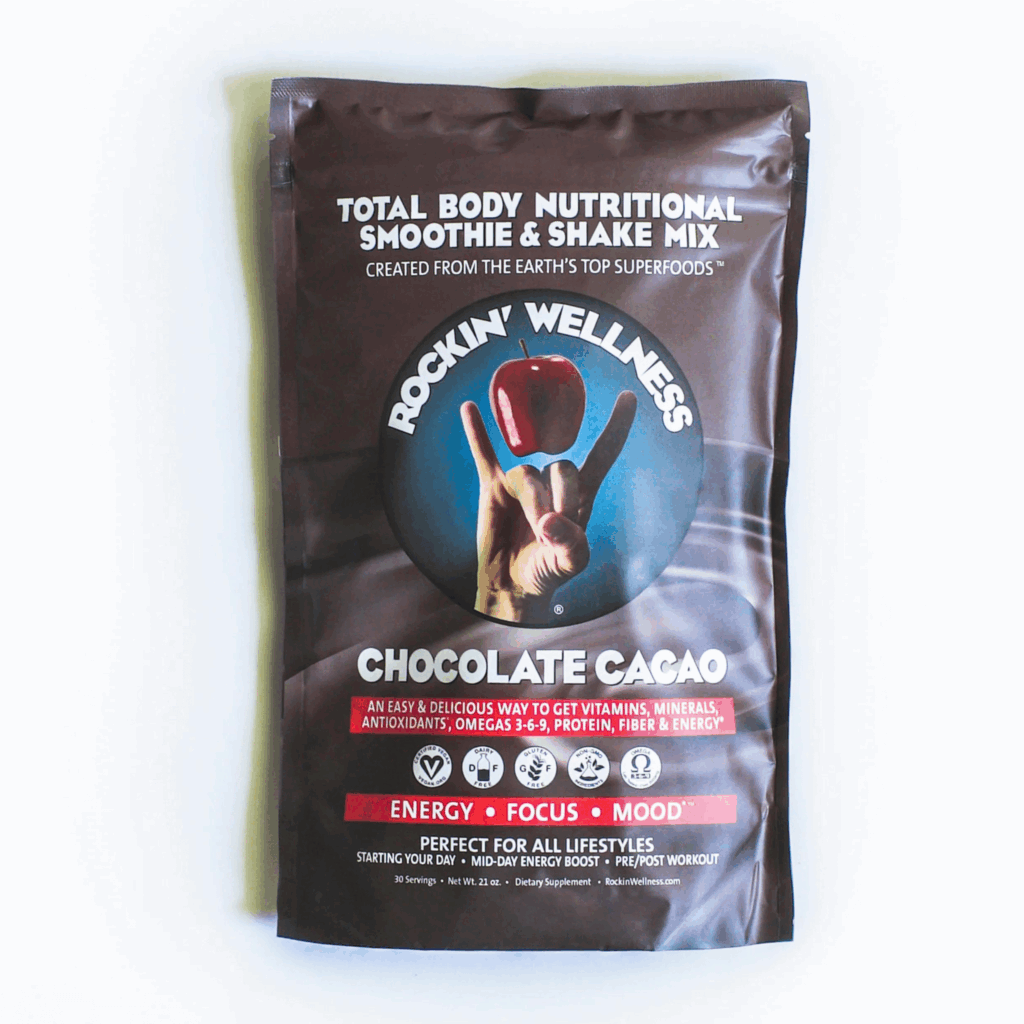

A complete body nutritious smoothie combination called Chocolate Cacao was made with the best superfoods on the planet. The 2000 mg of omega 3, 6, and 9 fatty acids, protein, and fiber are all easily and delectably obtained in this method. This delicious, nutritious drink with a chocolate flavor is a great healthy way to start the day.
One of the Best Vegan Recipes Out There: Rockin’ Wellness Vegan Protein Pancakes
Enjoy these protein-rich, thick, fluffy pancakes at any time of day or for breakfast. With these yummy additions, like berries, bananas, peanut butter, or chocolate chips, you can make them unique for anyone.
20-Minute Recipe Prep & Cook Time
INGREDIENTS
• 1 cup flour
• 3 Scoops Rockin’ Wellness Vanilla Protein
• 1 tbsp baking powder
• 1/2 tsp sea salt
• 2 tsp oil
• 1 cup milk (Dairy or Non-Dairy) or water
For CHOCOLATE pancakes, add in 4 scoops of Rockin’ Wellness Chocolate Cacao Nutritional Mix
INSTRUCTIONS
• Mix the flour, Rockin’ Wellness Vanilla Protein powder, Rockin’ Wellness Chocolate Cacao powder, (if making chocolate pancakes) baking powder & salt in a bowl
• Add Milk or Water – You may add more if needed; pour a little at a time. The batter should be thick but pourable
• Allow the batter to rest for 10 minutes
• Heat a pan over medium heat.
• Lightly butter pan and pour batter, approx. 3-4” size per pancake
• Cook until bubbles start to appear
• Flip and cook for 1-2 more minutes.
• Top with syrup and your favorite toppings & Enjoy!
• Leftovers can be frozen
What You Can Take Away From Plant-Based If Used as A Diet
Your life and health may change when you switch to a whole food plant-based diet.
And we’re not simply talking about “feeling better” or other anecdotal measurements of health gains, although if you speak to plant-based eaters, you’ll hear about those in abundance. A whole food plant-based diet and your body function together in a way that is backed by research, and it works quickly. When you eat this way, your body experiences multiple life-altering (and life-extending) changes within a couple of weeks. You’ll be able to feel and witness substantial benefits in a couple of hours. You’ll lengthen your life and lessen the likelihood that you’ll spend your latter years in and out of hospitals. All from increasing the number of plants on your plate. It is that easy. Numerous diets advertise detoxification, weight loss, and better skin. But from what are you purging? You might as well avoid including the BS (bad stuff) in your diet altogether. Real food is what our bodies are made to eat. Give people what they want: real food that comes from the land. We are aware that the food we choose to put into our bodies has the power to either help or hinder us, and science repeatedly demonstrates the superiority of a whole-food, plant-based diet for achieving maximum health.
* In partnership with our friends at Rockin’ Wellness.* Photo courtesy of Rockin’ Wellness
* These statements have not been evaluated by the Food and Drug Administration. These products are not intended to diagnose, treat, cure or prevent any disease.
* The information available on ewellnessmag.com, including text, graphics, and other materials is for informational purposes only. Reliance on any information in ewellnessmag.com is at the user’s own risk. Sponsored product placement may appear in the article. The visitor of this website acknowledges that the information available on or through ewellnessmag.com is not and is not intended to be a substitute for professional medical advice. Copyright © 2023 Brawo Press, Inc. All rights reserved.