

A full condition of physical, mental, and social well-being is what is meant by “health” according to the World Health Organization’s Constitution, which went into effect on April 7, 1948. The authors of the Constitution added to the definition that a person must be free from all diseases in order to be considered healthy (“and not merely the absence of disease or infirmity”) because they were aware of the tendency to view health as a condition dependent on the presence or absence of diseases. In this way, the World Health Organization’s definition merely added a requirement to the previous position that allowed for the declaration of health in the absence of disease; the conceptualization of health as a dimension of existence that can co-exist with the presence of a disease or impairment was not advanced as a result. Three different definitions of health are currently being utilized. The first is that being healthy means not having any illness or disability. The second is that being in a healthy state enables a person to successfully manage all of life’s obligations (implying also the absence of disease and impairment).

According to the third definition, being healthy is a condition of equilibrium that a person has achieved both inside himself and with his physical and social surroundings. Adopting one of these meanings over the other will have significant ramifications. If the absence of sickness is what constitutes health, then only a member of the medical community has the authority to proclaim someone to be healthy. Those who are currently considered healthy may be discovered to be ill tomorrow due to advances in medical research that may uncover symptoms of an illness that was previously untreatable. With this view of health, it is irrelevant how a person feels about their condition. The third definition describes health as a state of equilibrium that a person has attained with both their inner and outer physical and social environments. A preference for one of these interpretations over the other will have important consequences. If health is defined as the absence of disease, then only a member of the medical profession has the right to declare someone to be healthy. Due to developments in medical research that may unearth indications of a disease that was previously incurable, people who are today thought to be healthy may be found to be unwell tomorrow. How a person feels about their situation has no bearing on their state of health in this perspective. Others have symptoms of illness and poor function even when their physical tissues do not show any alterations. Some persons who hear voices—and may thus qualify for psychiatric evaluation and treatment—live happily in their communities without seeking or receiving medical attention. There are many people who have peptic ulcers and other disorders yet have no symptoms, are unaware that they are ill, and do not seek treatment. Since they perform as predicted for people of their age and gender in the general population, some of these people will also avoid the second sort of definition of health. According to the third of the aforementioned definitions, a person’s state of health is dependent on whether they have created a balance both inside themselves and with their surroundings. This implies that people with an illness or handicap will be regarded as healthy to the extent that they are able to achieve an internal balance that allows them to maximize their quality of life while having the condition. So, health would be an aspect of human existence that persisted even in the face of sickness, similar to how the sky persisted even when it was clouded over.

The benefit of this definition is that it recognizes that illnesses do not take the place of people being healthy; while they may have a more or less severe impact on balance, patients who suffer from illnesses (and their doctors) are always aware of the need to work on two tasks at once: first, to remove or alleviate the illness; second, to create, as best they can, a state of balance within themselves and in relation to their environment.
Vitamins: What They Are and How They Work
People require trace amounts of organic substances called vitamins. The body either does not make vitamins or generates very little of them, therefore the majority of our vitamins must come from diet. The needs for vitamins vary depending on the organism. For instance, although dogs can manufacture all the vitamin C they require, humans must obtain it from their food. Vitamin D is not present in sufficient amounts in diet for humans. The greatest source of vitamin D is sunshine exposure, which the body uses to manufacture the vitamin. An individual needs a different quantity of each vitamin to keep healthy since each vitamin has a different function in the body. Your body makes skin, muscle, and bone every day. It produces nutrient-rich red blood that travels thousands of miles along the body’s and brain’s neural connections, carrying nutrients and oxygen to far-flung outposts. Also, it creates chemical messengers that go from organ to organ, conveying instructions that support your existence. But, your body needs certain basic resources to achieve all of this. They comprise at least 30 vitamins, minerals, and food elements that your body requires but is unable to produce in large enough quantities on its own. Vitamins and minerals are regarded as vital nutrients because, when working together, they carry out hundreds of bodily functions. They support your immune system, heal wounds, and strengthen bones.
Vitamin Therapy
Vitamin supplementation is often given using one of three approaches: megavitamin cocktails that greatly exceed RDA, targeted megadoses of a particular vitamin, or regular multivitamin usage that supplements daily consumption to achieve recommended daily allowances (RDA). None of them have been demonstrated to be a successful therapy for ADHD symptoms. The first of those methods could be good for your general health, but there is no evidence that it helps with ADHD symptoms. Although one daily multivitamin has been shown to enhance cognitive function (Benton & Cook, 1991), presumed benefits are only present for those who experience vitamin deficiencies as a result of dietary deficits. No additional benefits have been demonstrated for people who follow a typical, healthy diet (Benton & Buts, 1990).
[restrict]The Importance of Taking Vitamins
A well-balanced diet is the body’s main source of vitamins and minerals. Yet if your body lacks vital vitamins, it’s all for nothing. You have a vitamin shortage when you have brittle hair and nails, hair loss, an itchy scalp, dandruff, and other indications of vitamin insufficiency. Hence, consuming vitamins is just as important for good hair as eating a diet that is well-balanced. Our hair experiences a lot on a daily basis, including heat, pollution, and grime, which makes vitamins even more essential! Vitamins have a variety of functions, including promoting the growth of new hair follicles and preventing hair loss. Also, did you know that consuming vitamins is beneficial for all biological processes as well? Vitamins are crucial for the transformation of food into energy. They are essential for developing the immune system, fixing cellular damage, and recovering from injuries and bone fractures. Vitamins facilitate daily functions and help slow down the aging process. A stronger immune system, healthier hair and skin, rapid healing from minor accidents, and other advantages of vitamin supplements include these.
Your body needs more nourishment as you age, and your metabolism also slows down with age. Your body absorbs less nutrients as a consequence, leaving you vitamin-deficient. No one can avoid reality, no matter how youthful they wish to remain. Moreover, aging reduces cell turnover. Your body requires multivitamins to deal with it, therefore you should take them. Daily vitamin intake will guarantee a healthy lifestyle and elegant aging!
Best You Can Be: Multivitamins for Men
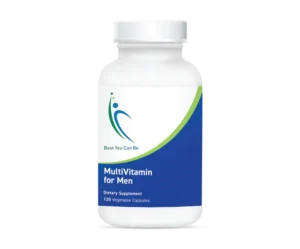
A complete multivitamin, mineral, and herbal supplement called MultiVitamin for Men, together with a few specialized amino acids, was created especially to meet the special nutritional needs of males. This base multiple formula provides specific nutrients to assist the prostate, liver, and adrenals along with broad-spectrum antioxidant protection in simple-to-swallow veggie capsules. For the best mineral absorption, it also includes AlbionTRAACS amino acid chelates, which are patented.
Best You Can Be: Multivitamins for Women
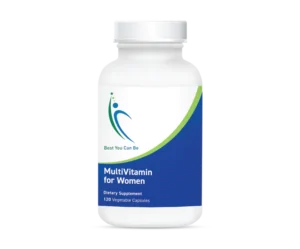
At every key stage of their lives, women experience considerable hormonal changes; the beginning of menstruation is the first such stage, followed by the end of menses, or menopause. Women who have experienced menopause also experience hormonal changes, and each disruption exerts distinct demands on the body. Women of all ages may now take the women’s multivitamin “Be The Best You Can Be,” which was created specifically to satisfy the needs of all women, regardless of the milestone they have achieved, in place of taking a range of various supplements for different purposes.
Multivitamin Risks
For the majority of people, multivitamins are typically safe. Nonetheless, there are potential hazards for specific people. A calcium supplement may raise your chance of having a heart attack, according to one research. Several medical professionals advise against calcium supplementation for those with a high risk of heart disease. Several dietary supplements, including multivitamins, folic acid, iron, and copper, were discovered to appear to be linked to an elevated risk of death in older women, according to a different research. A multivitamin with a lot of beta-carotene and vitamin A should be avoided if you smoke or have ever smoked, as those substances may raise your chance of developing lung cancer. If you’re pregnant, you should also be careful how much vitamin A you consume because it increases the chance of birth abnormalities. Although multivitamins normally don’t mix with medications, you should see your doctor before beginning a multivitamin that contains vitamin K if you use any medications that prevent blood clots. The drug’s efficacy may be decreased by vitamin K. But, not all vitamins are harmful to your health, especially if you consume them after visiting a doctor. The easiest way to absorb some necessary vitamins and minerals is through pills.
Conclusion
Many of us eat diets that are less healthy and more luxurious. The National Health and Nutrition Examination Survey found that, on average, Americans get around 30% of their calories from high-energy, nutrient-poor items including alcohol, sweets, and snacks. These meals are thereby displacing more nutrient-dense choices and lowering consumption of vital micronutrients. According to the 2020 Dietary Guidelines Advisory Committee, the majority of Americans actually don’t get enough dietary fiber, calcium, magnesium, potassium, choline, and the vitamins A, C, D, E, and K. For some groups, it is typical to take less iron, folate, protein, and vitamin B12. Several manufacturers provide specialized formulations for particular subpopulations, including prenatal, women, men, elderly, children, and even athletes, because micronutrient demands differ depending on age, gender, level of physical activity, and other variables. These goods may be a wise choice for satisfying certain micronutrient requirements while preventing overconsumption.