

Most people don’t think twice about taking medication until something goes wrong.
Maybe you’re recovering from surgery and feeling groggy. Maybe you’re managing a long-term condition and juggling multiple prescriptions. Or maybe you’re simply trying to remember whether you already took today’s pill.
That small moment of uncertainty, did I take it or not? is more common than most people realize. And it can lead to one of two problems: taking too much medication or not taking enough.
Both can be serious.
This is the everyday challenge that inspired DialCap Adherence Solutions®, a simple idea built around a powerful goal: helping people take the right medication at the right time, without confusion, stress, or guesswork.

Why Medication Mistakes Happen So Easily
It’s easy to assume medication mistakes come from carelessness. But in reality, most of them come from something much simpler: forgetfulness. Life is busy. Recovery is uncomfortable. And many medications require strict timing, sometimes multiple doses a day.
Even highly organized people can lose track.
Doctors refer to this problem as medication non-adherence. In simple terms, it means patients don’t always take their medication exactly as prescribed. And it’s one of the most common challenges in healthcare.
The reasons are usually not intentional:
- You get distracted after taking a dose
- You’re interrupted mid-routine
- You fall asleep or lose track of time
- You simply forget whether you already took it
Digital reminders can help, but they’re not perfect. Phone alarms go off at the wrong moment. Apps get ignored. Notifications disappear in a busy day. When there’s no clear physical confirmation, doubt creeps in. That’s when mistakes happen.
The Problem with “Did I Take It?” Thinking
If you’re unsure whether you took your medication, you’re left with a risky choice:
- Take it again and risk a double dose
- Skip it and risk missing treatment
Neither option feels good. And both can have consequences depending on the medication.
Double dosing certain medications can cause dizziness, low blood pressure, or more serious side effects. Missing doses can reduce how well a treatment works, especially for antibiotics, heart medication, or chronic conditions.
Over time, this uncertainty can also affect how doctors treat patients. If results don’t improve as expected, it may look like the medication isn’t working, when in reality, doses may simply be inconsistent.
It becomes a guessing game no one wants to play.
A Simple Idea Inspired by Real Life
DialCap Adherence Solutions® started with a very human moment.
After a serious injury and emergency surgery, the founder found herself managing multiple medications while recovering. Between pain, fatigue, and brain fog, keeping track of doses became surprisingly difficult.
Like many patients, she relied on memory, and quickly realized memory isn’t always reliable during recovery.
Later, while also managing medication schedules for her children, the same problem came up again: tracking doses mentally created stress and uncertainty.
That question kept coming back:
Why isn’t there a simple, physical way to know if you’ve taken your medication? That question led to the development of a new kind of pill bottle cap, one designed not around technology, but around clarity.
Why Standard Pill Bottles Fall Short
Most pill bottles are designed for pharmacies, not people.
They’re optimized for:
- Automated filling machines
- Shipping efficiency
- Child safety regulations
But at home, especially for seniors or patients recovering from illness, they can be difficult to manage.
Common issues include:
- Hard-to-open caps for people with arthritis
- No built-in reminder system
- No record of whether a dose was taken
- Bottles that look identical from day to day
Once the cap is closed, there’s no clear visual cue left behind. That’s where confusion begins.
A Smarter, Simpler Design Approach
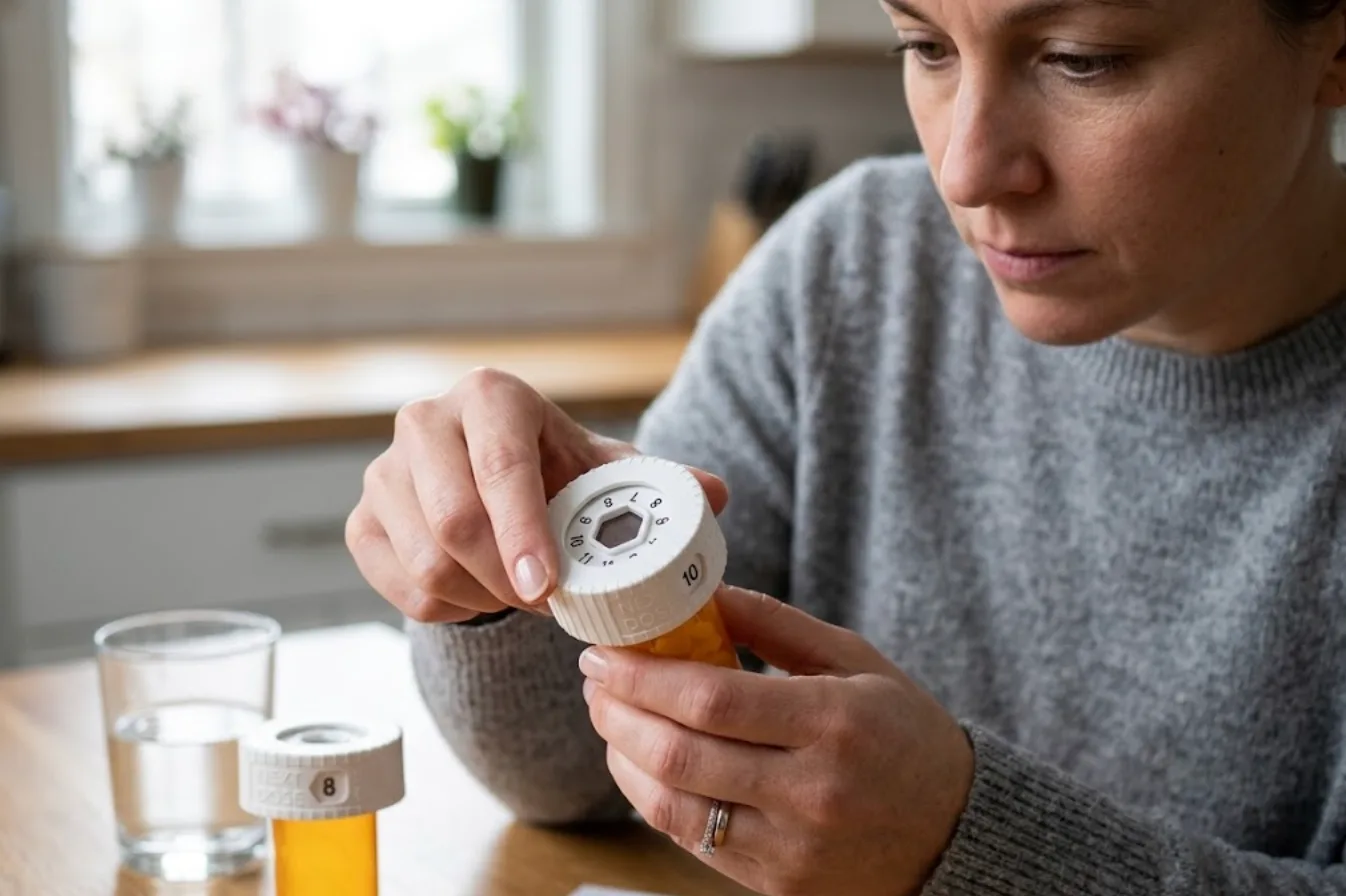
DialCap Adherence Solutions® takes a different approach by redesigning the pill bottle cap itself. Instead of relying on apps or external tools, the system builds memory directly into the container.
The goal is simple: make it obvious when medication was last taken.
This is done through a mechanical dial built into the cap, no batteries, no screens, no setup.
Just a physical action that records time and day.


HOURLY DialCap™: For Short-Term or Multiple Daily Doses
Some medications need to be taken several times a day, especially after surgery or during short-term treatment plans. The HOURLY DialCap™ helps with this by adding a simple timing system directly onto the bottle.
Key features include:
- Built-In Time Tracking
A rotating dial on the cap lets you mark the exact time you took your dose. This creates a clear visual reminder for later. - No Batteries or Apps Required
There’s nothing to charge, update, or sync. The system works mechanically, so it’s always ready when you are. - Helps Prevent Double Dosing
Instead of guessing, you can simply check the cap to see when the last dose was taken. - Designed for Real-World Recovery
Especially useful after surgery, during antibiotic cycles, or when taking medications multiple times per day.
The idea is not to replace medical instructions, but to support them in a simple, visible way.
DAILY DialCap™: For Long-Term Medication Routines
Many people take medication every day for chronic conditions such as:
- Blood pressure
- Thyroid health
- Mental wellness
- Metabolic conditions
Over time, days blend together. That’s where mistakes happen, especially when routines feel automatic.
The DAILY DialCap™ helps by turning the cap into a weekly tracking system.

Key features include:
- Seven-day dial for tracking daily doses
- Simple rotation to mark each day after taking medication
- Clear visual confirmation of whether today’s dose was taken
- Designed for long-term consistency
For caregivers, it also offers peace of mind without needing constant reminders or check-ins.
Designed for Real Life, Not Just Convenience
One of the biggest challenges in medication management is that it happens in real life, not in controlled environments.
People are busy. They’re tired. They’re distracted. They’re recovering. That’s why the design focuses on physical interaction rather than digital systems. Instead of adding another app or alert, the cap becomes the reminder. A simple twist replaces uncertainty. A quick glance replaces memory.
Supporting Independence, Not Replacing It
For many people, especially older adults or those with chronic conditions, medication routines can become a daily reminder of dependence.
Caregivers often step in to help. Family members double-check schedules. Apps send alerts. While helpful, this can sometimes feel overwhelming or intrusive.
The goal of DialCap Adherence Solutions® is different: to support independence. Not by removing responsibility, but by making it easier to stay in control.
The system is designed so that:
- Patients can manage their own medication confidently
- Caregivers don’t need to constantly verify doses
- Mistakes are less likely due to clearer physical tracking
It’s a small change in design, but a meaningful change in daily experience.
A Simple Answer to a Common Problem
Medication adherence doesn’t fail because people don’t care. It fails because life is complex, memory is imperfect, and systems are often not designed for real human behavior.
DialCap Adherence Solutions® focuses on a simple idea: if you can see it, you don’t have to remember it.
By turning medication tracking into something physical and immediate, the system removes the uncertainty that leads to mistakes. No apps. No guessing. No confusion. Just a clear, simple way to know where you stand.

Better Medication Management Starts with Simplicity and Clarity
Healthcare doesn’t always need to be more complex to be more effective. Sometimes, it just needs to be more human. And for many people managing medication every day, the smallest improvement in clarity can make a meaningful difference in safety, confidence, and independence.
DialCap Adherence Solutions® was built around that idea: helping people take the right dose, at the right time, with less stress and more certainty, one click at a time.